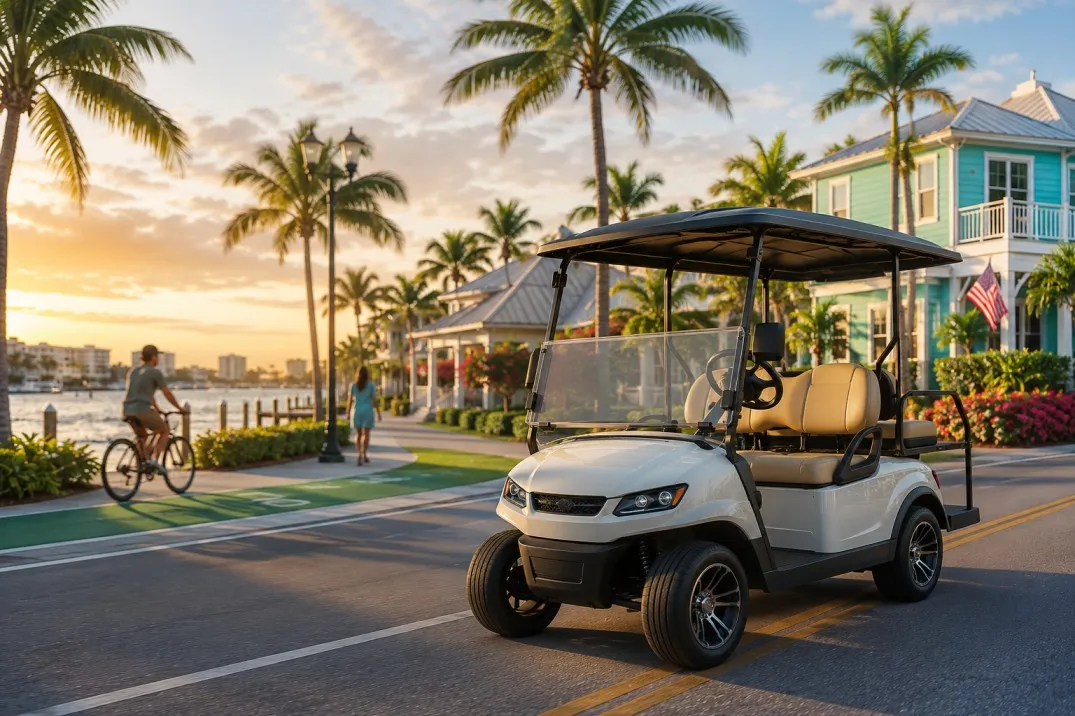
Southwest Florida has become one of the most golf cart-friendly regions in the country. Neighborhoods from Cape Coral to Naples now allow residents to drive carts on designated roads for errands, school runs and weekend outings. With this shift comes a practical question many homeowners overlook. That question is usually, “Do you actually need Golf Cart Insurance in Southwest Florida, or is a standard homeowner’s policy enough?”
The short answer is that most homeowner policies were never designed with everyday cart use in mind. They typically cover limited scenarios, like theft or fire damage, while the cart remains in a garage. Once that cart hits public roads or golf cart lanes, the coverage gap becomes obvious fast.
Why More Residents are Making the Switch
The rise in golf cart ownership is no longer driven solely by convenience. Retirement communities, gated developments, and even some downtown districts have built infrastructure specifically for low-speed vehicles. Communities such as Fort Myers Beach and Bonita Springs have leaned further into this shift, especially in areas with warm year-round weather and slower-paced living.
This growth has changed how insurers approach coverage. A cart used occasionally for a Sunday drive around the neighborhood carries a different risk than one used daily for grocery runs or dropping kids at school. Insurance providers have adapted their policies to reflect these changing usage patterns, making the options of flexible golf cart insurance in Southwest Florida more common.
What Golf Cart Insurance Typically Covers
Coverage varies by provider, but most policies built for Southwest Florida residents include some combination of the following:
i. Liability protection if the cart causes injury or property damage to someone else.
ii. Collision coverage for damage to the cart itself.
iii. Comprehensive coverage for theft, vandalism or weather-related damage.
iv. Medical payments coverage for the driver or passengers.
v. Uninsured motorist protection in case of an accident with someone who lacks coverage.
These coverages become far more valuable once golf carts are used beyond private property. Carts can reach speeds of 15 to 25 miles per hour, and accidents involving pedestrians or other vehicles happen more often than most owners realize, particularly in high-traffic communities near beaches and shopping areas.
Local Rules Add Another Layer
Florida law requires golf carts to meet specific criteria for road use, including headlights, taillights and reflectors if driven after dark. Many counties also require carts to stay on roads with speed limits of 30 miles per hour or lower unless a special permit allows otherwise.
Under Florida Statute 316.212, golf carts are treated differently from low-speed vehicles (LSVs). A standard golf cart isn't required to carry insurance, but once that same vehicle is registered and titled as an LSV for broader road use, Lee County and Collier County require it to carry insurance like any other motor vehicle. That financial risk has encouraged many residents to purchase coverage they might previously have considered unnecessary.
Final Thoughts
Southwest Florida’s transportation habits are evolving in ways that reflect its climate, lifestyle and community design. Carts once used strictly on golf courses now function as legitimate short-distance vehicles for entire neighborhoods, and as more residents rely on them for daily movement rather than occasional golf outings, protecting that investment becomes a practical necessity rather than an optional add-on.
Understanding golf cart insurance in Southwest Florida options now, before an accident forces the issue, gives owners the kind of peace of mind that matches how naturally these vehicles have become part of everyday life here.